What stops badge sharing at a paid conference without turning the check-in desk into airport security?
Two colleagues splitting one ticket is the most common form of event fraud, and it is mostly preventable with a few scanning rules and a badge design that makes passing it around awkward.
How badge sharing actually happens
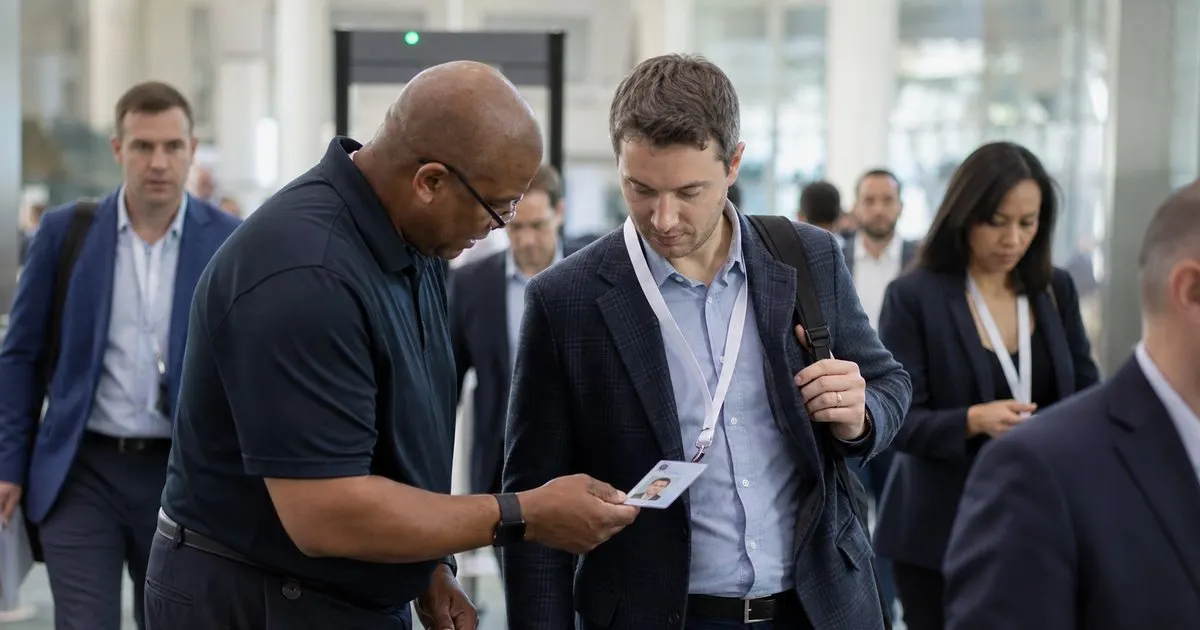
The typical case is not a professional gate crasher. It is two people from the same company who bought one ticket; one attends the morning sessions, hands the badge over at lunch, and the other attends the afternoon. Or a badge that walks out of the venue at the end of day one and comes back on day two around a different neck. Or a lost badge that is found and worn by someone who never registered. None of these people think of it as fraud, which is why appeals to honesty do little. Related: How should an event handle walk-up attendees who never registered before arriving at the door?
The cost depends on the event. For a paid conference the lost revenue is straightforward: every shared badge is a ticket not sold. There is a subtler cost in the attendance data, since a shared badge makes one person look like they attended everything, and in catering and seating, since two bodies consume for one registration. At events with age restrictions or controlled areas, the cost becomes a liability issue rather than a revenue one. Related: How can event organizers speed up the check-in line during the busy first hour of a conference?
Keep reading: How can event organizers speed up the check-in line during the busy first hour of a conference?, What are the benefits of printing event badges on site instead of pre printing them all in advance?, How do organizers track session capacity so a popular conference talk does not become overcrowded?. See how BadgeCheckr helps you event attendee badge check-in and scanning.
Scanning rules that catch most of it
The first rule is that every entry is scanned, and the scanning app flags a badge that has already been scanned in at the same door within a short window. A badge that entered at nine and tries to enter again at nine fifteen without an exit scan is either a wanderer who stepped out or someone else wearing it; the monitor asks one polite question and resolves it. The second rule is daily re-scanning at multi-day events, so a badge cannot silently change hands overnight without at least passing a monitor.
The third rule is exit scanning at events where sharing is a real concern. With entry and exit both recorded, the app can reject a re-entry that comes suspiciously fast or from a different door, and it can produce a clean count of who is inside. None of these rules require a bag check or an ID inspection; they only require that the scan happens and that the app knows what to look for. Monitors should be told which flags matter and what to say, so the interaction stays friendly.
Badge design that discourages passing it around
A photo on the badge is the single strongest deterrent, because a monitor can compare it to the face in under a second and the badge is useless to anyone else. Collect the photo at registration or at the desk with the tablet camera when the badge is printed. Where photos are not acceptable to the audience, print the attendee's name large and their company under it, since people are reluctant to walk around wearing someone else's name and monitors notice mismatches during conversation. Related: How can a large event run multiple check-in stations at once without checking anyone in twice?
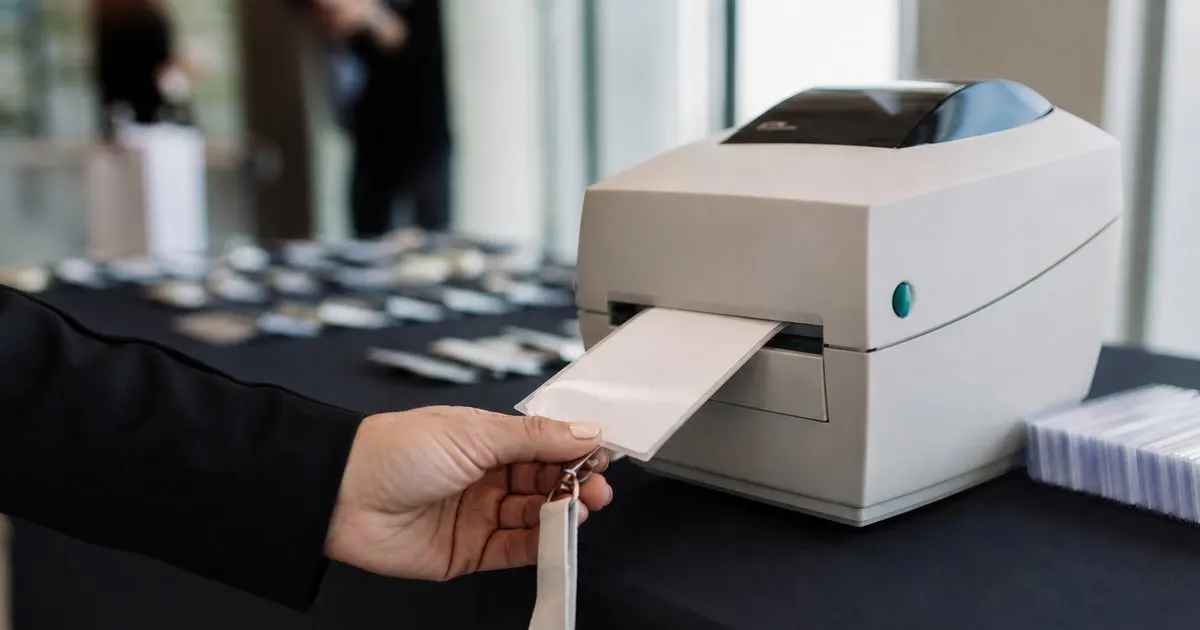
Make the badge hard to reproduce casually: a specific stock, a holographic seal, or a printed pattern that a home printer cannot match well. Use a different badge color or lanyard per ticket type, so a workshop-only badge is visibly wrong at the main keynote. And print the registration ID as human-readable digits, so when a badge scans as already used, the monitor can look up the record and see the name and photo of the person it belongs to.
Keeping it proportionate
The goal is to make sharing inconvenient and detectable, not to make every honest attendee feel suspected. Most of the friction should live in the software, where a duplicate scan is flagged quietly and a monitor sees a note, rather than in visible security theater. Train monitors to treat every flag as a probable innocent explanation first: a lost badge, a reprint that was not voided, a co-worker who was handed the wrong lanyard at the desk. The tone should be curiosity, not accusation.
When a genuine case appears, resolve it without drama: offer to sell the second person a ticket at the door, or ask them to leave if that is the policy, and note the incident on the record. Publish the policy in the attendee terms so nobody can claim surprise. Over time, an event with a reputation for scanning every door and putting photos on badges sees the behavior fade, because people learn that a shared badge will be noticed. That reputation, quietly earned, is worth more than any single confrontation. Related: What are the benefits of printing event badges on site instead of pre printing them all in advance?
- Most badge sharing is two colleagues splitting a ticket, not professional gate crashing, so honesty appeals do little.
- Scan every entry, flag duplicates within a short window, and re-scan daily at multi-day events to catch most cases.
- A photo on the badge is the strongest deterrent; large printed names and per-ticket colors help where photos are not practical.
- Keep friction in the software and train monitors to treat every flag as a probable innocent explanation first.

Julien Jimenez
Julien Jimenez is an independent software builder based in Paris. He designs, ships, and operates focused SaaS products for small businesses and independent professionals. Read the full author page.
A check-in line that moves
Event attendee badge check-in and scanning. BadgeCheckr is built to help you put this into practice.
Set up check-inMore from the BadgeCheckr blog


Get the BadgeCheckr playbook
Practical guides on event check-in, straight to your inbox as we publish them. No spam, unsubscribe any time.