How can event organizers speed up the check-in line during the busy first hour of a conference?
Turning the front table into a fast lane so the morning rush does not sour the whole event.
Replace flipping through printed lists with instant lookup, finding a name by typing a few letters or scanning a code so each check-in takes seconds. Run several synced stations to spread the load without double check-ins, and watch a live arrivals view so you can open another station before the line grows.
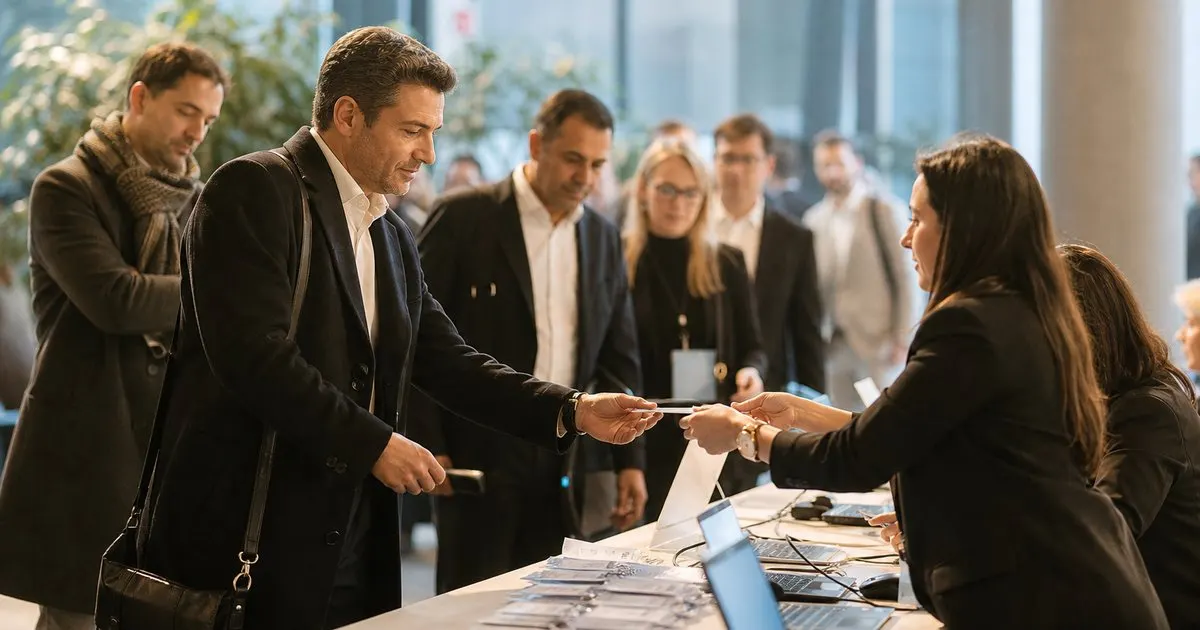
The first hour sets the tone
Most arrivals cluster in the first hour, and a slow line there puts attendees in a bad mood before the opening session even starts. Related: How should an event handle walk-up attendees who never registered before arriving at the door?
That early impression sticks, so the check-in experience shapes how attendees feel about the whole event. Related: What are the benefits of printing event badges on site instead of pre printing them all in advance?
Keep reading: What are the benefits of printing event badges on site instead of pre printing them all in advance?, How do organizers track session capacity so a popular conference talk does not become overcrowded?, How can a large event run multiple check-in stations at once without checking anyone in twice?. See how BadgeCheckr helps you event attendee badge check-in and scanning.
Search and scan beats paper
Flipping through printed lists is the bottleneck. Finding a name by typing a few letters or scanning a code cuts each check-in to seconds.
When the lookup is instant, the line keeps moving even during the heaviest part of the morning rush.
More stations when it counts
A single table cannot absorb a big rush no matter how fast it is, so running several check-in stations spreads the load.
When those stations stay in sync, attendees can approach whichever is open without any risk of being checked in twice. Related: How can a large event run multiple check-in stations at once without checking anyone in twice?
Reading the crowd live
A live arrivals view shows when the rush is building, so you can open another station before the line grows out of control.
Reacting to the real crowd, rather than a guessed schedule, is what keeps the entrance smooth from the first arrival to the last. Related: How can organizers measure real event attendance instead of relying on registration numbers alone?
- A slow first hour sours the whole event
- Search and scan cut each check-in to seconds
- Multiple synced stations absorb the rush
- A live view lets you add stations in time
Julien Jimenez
Julien Jimenez is an independent software builder based in Paris. He designs, ships, and operates focused SaaS products for small businesses and independent professionals. Read the full author page.
Frequently asked questions
Why does the first hour matter so much?
Most arrivals cluster in the first hour, so a slow line there puts attendees in a bad mood before the opening session starts. That early impression sticks and shapes how they feel about the whole event.
How do you know when to open another station?
A live arrivals view shows when the rush is building, so you react to the real crowd rather than a guessed schedule. Adding a station before the line grows out of control is what keeps the entrance smooth from first arrival to last.
A check-in line that moves
Event attendee badge check-in and scanning. BadgeCheckr is built to help you put this into practice.
Set up check-inMore from the BadgeCheckr blog

Get the BadgeCheckr playbook
Practical guides on event check-in, straight to your inbox as we publish them. No spam, unsubscribe any time.